
Quick Answer: Where is ACCA Recognized?
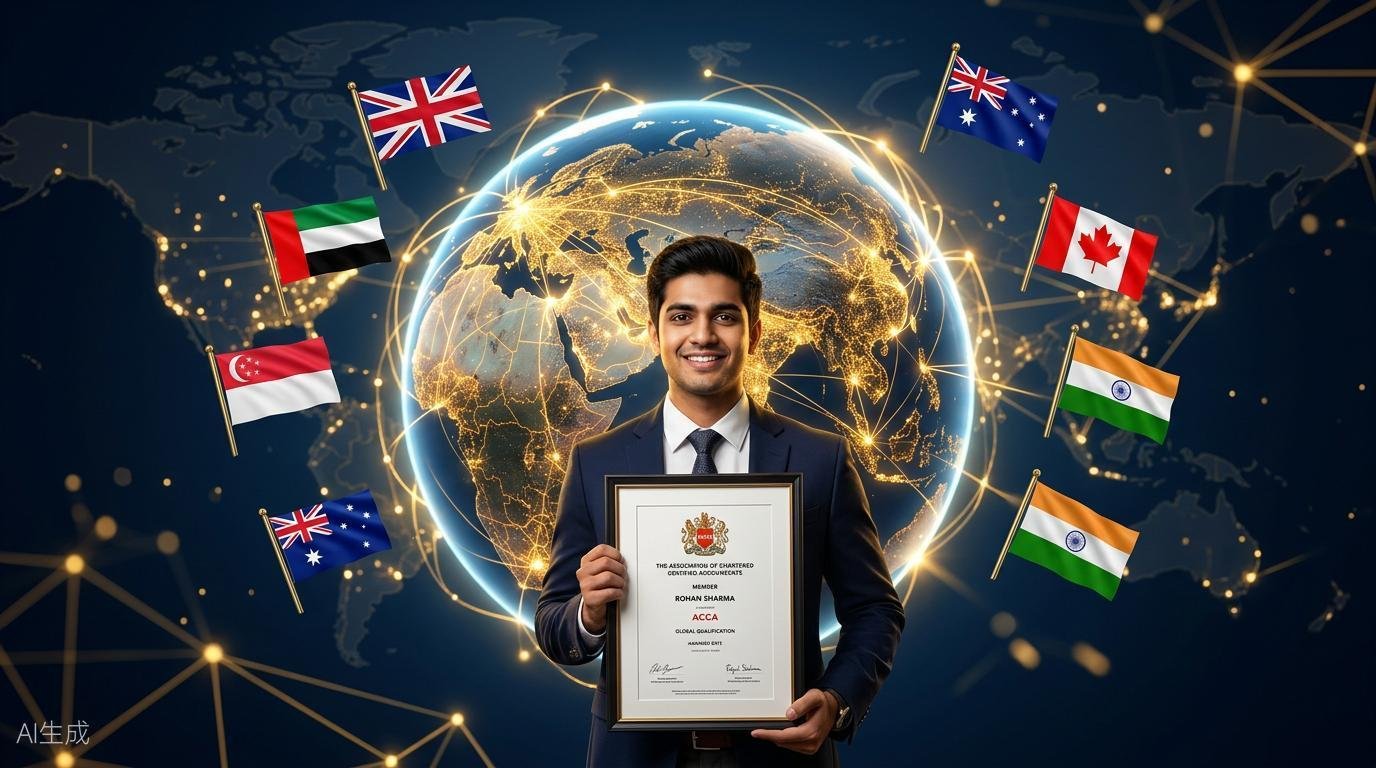
ACCA is recognized and valued in over 180 countries and territories worldwide, according to ACCA Global's 2025 Annual Report. It is the largest and most globally connected professional accounting body, with statutory recognition in the UK, UAE, Singapore, Malaysia, Hong Kong and numerous Commonwealth nations. In India, ACCA is recognized by MNCs, Big 4 firms, global banks, consulting companies and the expanding Global Capability Center (GCC) ecosystem. However, ACCA does not grant statutory signing authority for Indian company audits under the Companies Act 2013.
The question Indian students should ask is not simply "Is ACCA valid in India?" but rather: "Does ACCA help me achieve my specific career goal in my target geography?" For MNC roles, Big 4 careers, GCC positions and global mobility — the answer is a resounding yes. For independent statutory audit practice in India — you will need the Indian CA.
ACCA in 180+ Countries: The Full Picture
According to ACCA Global, the qualification has a presence on every inhabited continent. The membership base is distributed across:
- Europe — ~95,000 members, with the UK as the headquarters
- Asia-Pacific — ~78,000 members, with China, Malaysia and Singapore as major hubs
- Africa — ~42,000 members, with Nigeria, South Africa, Kenya and Ghana leading
- Middle East — ~18,000 members, with UAE as the regional hub
- Americas — ~14,000 members, with the US, Canada and Caribbean nations
This global footprint means ACCA members can realistically pursue careers across six continents without requalifying from scratch. No other professional accounting qualification offers this breadth of geographic mobility.
ACCA in the United Kingdom
The UK is ACCA's home market and the center of its statutory authority. In the UK, ACCA members enjoy:
- Full statutory recognition as auditors under the Companies Act 2006
- Recognition by HMRC for tax advisory and compliance work
- Eligibility for insolvency licenses and forensic accounting work
- Regulation by the Financial Reporting Council (FRC) as a recognized qualifying body
- Practice rights — ACCA members can establish their own accounting practices
According to the Financial Reporting Council's 2024 Key Facts and Trends report, ACCA members represent approximately one-third of all statutory auditors in the UK. The average salary for ACCA-qualified professionals in London ranges from £35,000 for freshers to £80,000+ for senior roles, according to Glassdoor UK 2025 data.
For Indian students who aspire to work in London or the broader UK financial services sector, ACCA is arguably the most direct pathway. The UK Skilled Worker visa recognizes ACCA qualifications and Big 4 UK offices actively recruit from ACCA talent pools in India, the Middle East and Africa.
ACCA in the UAE & Middle East
The UAE is ACCA's most important market outside the UK and Dubai specifically has emerged as a global hub for ACCA-qualified professionals. According to ACCA Middle East's 2024 employment survey:
- Full statutory recognition under UAE Commercial Companies Law
- ACCA members can register as approved auditors with the UAE Ministry of Economy
- DIFC (Dubai International Financial Centre) recognizes ACCA for audit and compliance roles
- ADGM (Abu Dhabi Global Market) similarly recognizes ACCA professionals
The Middle East is particularly attractive for Indian ACCA professionals because:
- Salaries are 30–50% higher than Indian equivalents
- Tax-free income in the UAE, Qatar and Bahrain
- Large Indian diaspora communities make cultural transition easier
- Major Indian companies (Tata, Reliance, Adani) have regional headquarters in Dubai
- GCCs of global MNCs increasingly base their regional finance functions in Dubai
According to GulfTalent's 2025 salary survey, ACCA-qualified finance managers in Dubai earn AED 25,000–45,000 per month (₹55–100 LPA), while senior finance directors at large MNCs earn AED 50,000–80,000+ per month (₹1.1–1.8 crore).
ACCA in Singapore
Singapore is a key financial hub where ACCA holds strong professional standing. According to the Accounting and Corporate Regulatory Authority (ACRA) of Singapore:
- ACCA members can apply to be public accountants in Singapore (subject to meeting additional local requirements)
- ACCA is a recognized qualification for company secretaries
- The Institute of Singapore Chartered Accountants (ISCA) has a mutual recognition pathway with ACCA
Singapore's status as Asia's leading financial center means ACCA-qualified professionals find roles in banking, asset management, fintech and MNC regional headquarters. According to LinkedIn Singapore salary data 2025, ACCA professionals earn SGD 45,000–80,000 (₹27–48 LPA) at mid-level positions.
ACCA in Australia
ACCA has a mutual recognition agreement (MRA) with CPA Australia, one of Australia's two major accounting bodies. Under this MRA:
- ACCA members can obtain CPA Australia membership through a streamlined pathway
- Additional requirements include completing CPA Australia's taxation and law competency requirements
- ACCA members who obtain CPA Australia designation can sign audit reports in Australia
Australia's points-based skilled migration system awards significant points for ACCA qualifications, making it an attractive destination for Indian ACCA professionals seeking permanent residency. According to Seek.com.au 2025 data, ACCA-qualified management accountants in Sydney and Melbourne earn AUD 80,000–130,000 (₹43–70 LPA).
ACCA in Canada
ACCA has a mutual recognition agreement with Chartered Professional Accountants Canada (CPA Canada). Under this agreement:
- ACCA members can obtain the CPA Canada designation through a streamlined pathway
- The pathway typically requires passing one capstone examination on Canadian tax and law
- Once CPA Canada designation is obtained, full audit signing rights are available
Canada's express entry immigration system recognizes ACCA qualifications and the country's growing Indian diaspora makes it an increasingly popular destination. According to Indeed.ca 2025 salary data, ACCA-qualified senior accountants in Toronto earn CAD 70,000–110,000 (₹42–66 LPA).
ACCA in India
India represents one of ACCA's fastest-growing markets. According to ACCA India's 2024 annual review, there are over 45,000 ACCA students and members in India, making it one of the top 5 markets globally. However, the recognition landscape requires nuance:
Where ACCA is Strongly Recognized in India
- Big 4 Firms — Deloitte, PwC, EY and KPMG actively hire ACCA-qualified professionals for audit, tax, advisory and consulting roles
- MNCs — Companies like Amazon, Microsoft, Google, Unilever, Nestle and Standard Chartered value ACCA for financial reporting, FP&A and controllership
- Global Capability Centers (GCCs) — India's rapidly expanding GCC ecosystem (now 1,600+ centers) heavily prefers ACCA for accounting, reporting and compliance roles
- Consulting Firms — McKinsey, BCG, Bain and Big 4 advisory value ACCA's strategic business skills
- Banking & Financial Services — HSBC, Citibank, Deutsche Bank and Barclays hire ACCA for operations, compliance and risk
- Startups & Unicorns — India's startup ecosystem increasingly hires ACCA-qualified CFOs
Where ACCA Has Limitations in India
- Statutory Audit Signing — ACCA members cannot sign audit reports for Indian companies under the Companies Act 2013
- Government Jobs — Most Indian government positions requiring accounting qualifications specify Indian CA or CMA
- Indian PSUs — Public sector undertakings typically require Indian CA for senior finance roles
- Independent Practice — To start your own CA firm with statutory audit rights in India, you need the Indian CA from ICAI
The Bottom Line for India
ACCA opens more doors in India's private sector — particularly MNCs, Big 4, GCCs, consulting and startups — than any single local qualification except the Indian CA itself. For the 80%+ of Indian commerce graduates who will work in the private sector, ACCA's private-sector recognition is more than sufficient.
ACCA in Malaysia
Malaysia is one of ACCA's strongest markets in Asia. According to the Malaysian Institute of Accountants (MIA), ACCA is a recognized professional qualification that enables members to:
- Register as Chartered Accountants with MIA (subject to meeting additional requirements)
- Obtain audit signing rights in Malaysia
- Practice as public accountants and tax agents
Malaysia's growing economy, English-speaking business environment and relatively straightforward work visa policies make it an attractive destination for Indian ACCA professionals. According to JobStreet Malaysia 2025, ACCA-qualified finance managers earn MYR 8,000–15,000 per month (₹14–27 LPA).
ACCA in Hong Kong
Hong Kong recognizes ACCA through the Hong Kong Institute of Certified Public Accountants (HKICPA). ACCA members can:
- Apply for HKICPA membership through a mutual recognition agreement
- Obtain full audit signing rights once HKICPA membership is granted
- Practice as Certified Public Accountants in Hong Kong
Hong Kong's status as a global financial center offers ACCA professionals access to roles in investment banking, asset management and MNC regional headquarters. According to LinkedIn Hong Kong salary data 2025, ACCA-qualified senior accountants earn HKD 35,000–60,000 per month (₹37–63 LPA).
ACCA in Africa
Africa is one of ACCA's fastest-growing regions, with particularly strong presence in:
- Nigeria — ACCA is recognized by the Financial Reporting Council of Nigeria; members can practice as accountants and auditors
- South Africa — ACCA has an MOU with SAIPA; ACCA members can obtain the South African CPA designation
- Kenya — Full recognition by the Institute of Certified Public Accountants of Kenya (ICPAK)
- Ghana — Recognized by the Institute of Chartered Accountants Ghana (ICAG)
For Indian ACCA professionals interested in emerging market exposure, Africa offers unique opportunities in infrastructure, fintech and natural resources sectors.
Signing Authority: Where ACCA Members Can Sign Audit Reports
This is one of the most common questions from Indian students. Here is the definitive breakdown:
| Country/Region | Audit Signing Authority? | Notes |
|---|---|---|
| United Kingdom | Yes — Full | Under Companies Act 2006 |
| UAE | Yes — Full | Under Commercial Companies Law |
| Singapore | Yes — With local requirements | Through ACRA registration |
| Malaysia | Yes — Through MIA | Additional requirements apply |
| Hong Kong | Yes — Through HKICPA | Mutual recognition pathway |
| Ireland | Yes — Full | Similar to UK |
| Australia | Yes — Through CPA Australia MRA | Additional tax/law exam |
| Canada | Yes — Through CPA Canada MRA | Capstone exam required |
| Nigeria | Yes — Full | Recognized by FRC Nigeria |
| Kenya | Yes — Full | Through ICPAK |
| India | No | Indian CA required for statutory audit |
| USA | No — Direct | US CPA required; ACCA has pathway |
| South Africa | Yes — Through SAIPA | MOU pathway available |
MOU Agreements with Local Accounting Bodies
ACCA has formal mutual recognition agreements (MRAs) and memoranda of understanding (MOUs) with numerous professional accounting bodies worldwide. These agreements create streamlined pathways for ACCA members to obtain local qualifications.
| Local Body | Country/Region | Type of Agreement |
|---|---|---|
| CPA Australia | Australia | Full MRA — streamlined pathway |
| CPA Canada | Canada | Full MRA — capstone exam |
| HKICPA | Hong Kong | Full MRA |
| Chartered Accountants Ireland | Ireland | Full MRA |
| MIA | Malaysia | Recognition agreement |
| SAIPA | South Africa | MOU pathway |
| ICPAK | Kenya | Full recognition |
| ICAG | Ghana | MOU pathway |
| ISCA | Singapore | Recognition pathway |
These MRAs are a significant advantage for Indian professionals who may want to work in multiple countries during their career. Instead of starting from scratch in each new country, ACCA members can typically obtain local qualifications with minimal additional effort.
ACCA vs Local Qualifications: When ACCA is Enough
A practical framework for Indian students:
When ACCA Alone is Sufficient
- MNC Corporate Roles — Controllership, FP&A, treasury, business analysis — ACCA is globally recognized
- Big 4 Audit & Advisory — Audit support, tax advisory, consulting — ACCA is preferred in most countries
- Consulting — Strategy, operations and financial advisory — ACCA's SBL paper provides relevant credentials
- Banking Operations — Compliance, risk, operations — ACCA is well-regarded
- Startup & Fintech — CFO, finance lead, VP Finance — ACCA's breadth is valued
- GCC Roles — India's GCC ecosystem strongly prefers ACCA
When You Need a Local Qualification Too
- Statutory Audit Practice — In India, USA and most jurisdictions, local CA/CPA is needed for signing authority
- Government & PSU Roles — Indian government positions typically require Indian CA/CMA
- Public Practice — Running your own audit firm in most countries requires local licensing
- Senior Regulatory Roles — Central bank and regulatory body positions typically prefer local qualifications
The Hybrid Strategy
Many Indian professionals pursue ACCA first for its global recognition and career flexibility, then add the Indian CA (through the CA Final route for ACCA members) or US CPA (through the ACCA-NAUB pathway) if their career requires local signing authority. This hybrid approach maximizes both global mobility and local credibility.
ACCA Recognition Level by Country
| Country | Recognition Level | Audit Signing | Key Advantage |
|---|---|---|---|
| UK | Full statutory | Yes | Home market; full practice rights |
| UAE | Full statutory | Yes | Tax-free; high salaries |
| Singapore | Full professional | Via HKICPA/ACRA | Asia financial hub |
| Malaysia | Full statutory | Yes (via MIA) | Easy work visas |
| Hong Kong | Full professional | Via HKICPA | Global financial center |
| Australia | Full (via CPA Aus MRA) | Yes (via CPA Aus) | PR pathway; high wages |
| Canada | Full (via CPA Can MRA) | Yes (via CPA Can) | Express entry points |
| India | Strong professional | No | MNCs, Big 4, GCCs |
| Nigeria | Full statutory | Yes | Largest African economy |
| Ireland | Full statutory | Yes | EU access; tech hub |
| USA | Professional (no statutory) | No (CPA required) | MNC roles; ACCA pathway to CPA |
| China | Growing professional | No | Huge market; MNC roles |
From Nagpur and Central India
For students in Nagpur wondering if ACCA is "valid in India" — the answer is yes, with context. ACCA is recognized by MNCs, Big 4 firms and global companies operating in India. While it doesn't give you signing authority for Indian statutory audits, it opens doors that a purely domestic qualification cannot.
Prepper Gurukul is an ACCA Gold Learning Partner serving Central India (Maharashtra, M.P. and Chhattisgarh). But the same principles apply whether you are studying in Mumbai, Delhi, or Dubai — our online programs and partnerships mean geography is never a barrier.
The question "Is ACCA valid in India?" misses the point. The real question is: "Does ACCA help me get the job I want?" For MNC roles, Big 4 positions and global mobility — absolutely yes. For starting your own CA practice in India — you'll need the Indian CA. Know your goal, then choose your qualification.
Final Thoughts
ACCA's 180+ country recognition is not a marketing claim — it is a genuine career advantage that no other accounting qualification can match. For Indian students who dream of working in Dubai, London, Singapore, Toronto, or Sydney, ACCA provides a direct, proven pathway.
The key is to be honest about your career goals. If you want global mobility, MNC careers and the flexibility to work across countries, ACCA is the best investment you can make. If you are certain about building a practice in a single country (like India), complementing ACCA with the local CA may be the optimal strategy.
According to ACCA Global's 2025 member survey, 67% of ACCA members have worked in more than one country during their career — a statistic that speaks to the qualification's true value: not just a credential, but a passport to global professional mobility.