
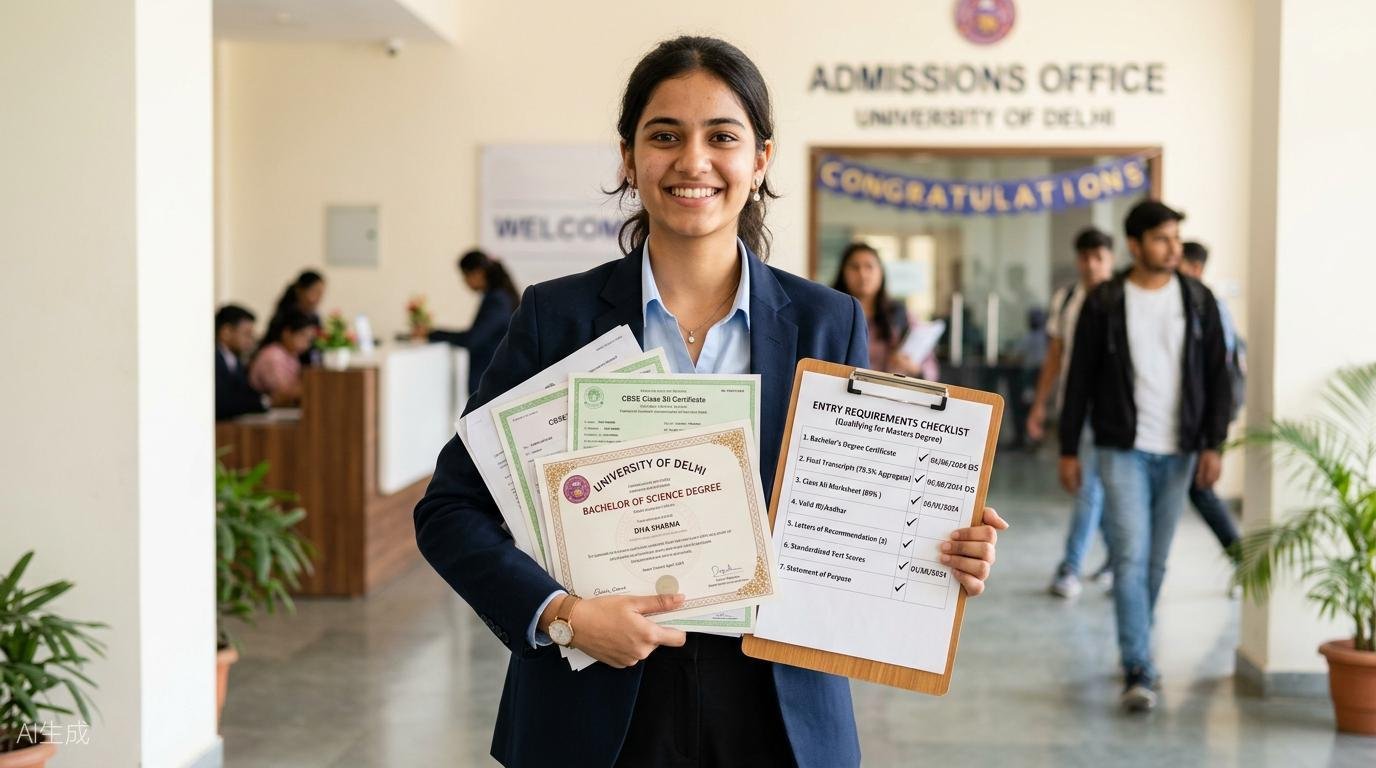
The most common question we hear at Prepper Gurukul isn't about fees or subjects. It's simpler than that: "Am I even eligible?" Every week, a student walks in convinced that ACCA is only for toppers, or only for BCom graduates, or only for students from metro cities. None of that is true.
According to ACCA Global's official entry requirements, the qualification is designed to be accessible. Whether you've just cleared your 12th boards from a state board in Nagpur, you're a CA Inter drop-out reconsidering your path, or you're an MBA graduate looking to add a global credential — there's an entry route for you. The key is knowing which path applies to your situation and planning accordingly.
In this guide, we'll walk through every ACCA entry path available to Indian students in 2026. We'll cover the exact marks you need, the exemptions you can claim, the documents required and the common pitfalls that delay registration. By the end, you'll know precisely where you stand and what your next step should be.
Direct Entry After 12th: The Most Common Route
The majority of Indian students begin their ACCA journey immediately after Class 12. This is also the route that confuses people the most, because the marks criteria are specific — but not as intimidating as they first appear.
Exact Marks Required
Per ACCA Global's official Indian entry criteria, direct entry after 12th requires:
- Five subjects passed at the 10+2 level (at least three taken in Year XII)
- The five subjects must include English and Mathematics or Accounts
- 65% or above in at least two of those subjects
- 50% or above in the remaining subjects
In practice, this means: if you scored 65%+ in English and 65%+ in Accounts (or Maths) and at least 50% in your other three subjects, you qualify for direct entry. The "65% in two subjects" rule is what trips students up — many assume it means 65% aggregate. It doesn't. It's subject-specific and both English AND Maths/Accounts must be among your strong subjects.
Key insight: Science students with 65% in Mathematics and English also qualify for direct entry. The qualifying subject can be either Accounts OR Mathematics — ACCA accepts both. Arts students typically need to take the FIA route (covered below).
Which Boards Are Accepted?
ACCA recognises all major Indian examination boards: CBSE, ICSE, ISC and all State Boards (Maharashtra State Board, Karnataka PU Board, Tamil Nadu State Board, etc.). International boards like IB (International Baccalaureate) are also accepted, typically requiring at least 24 points overall for diploma holders.
According to Synthesis Learning's 2026 ACCA eligibility guide, the key is that your board must be a recognised educational authority. If you're unsure whether your specific board qualifies, you can verify directly through the ACCA Global portal or through an approved learning partner like Prepper Gurukul.
Graduate Entry: BCom, BBA & Other Degrees
If you've already completed a bachelor's degree, you're automatically eligible for ACCA registration. The bigger question for graduates isn't whether you can apply — it's how many exemptions you'll receive.
BCom Graduates
A standard BCom (Pass) from a recognised Indian university typically qualifies for up to 3 exemptions: BT (Business and Technology), MA (Management Accounting) and FA (Financial Accounting). A BCom (Hons) from a strongly accredited university may qualify for up to 4 exemptions — the three Applied Knowledge papers plus LW (Corporate and Business Law).
However, not all BCom programmes are equal in ACCA's eyes. As noted by Zell Education's 2026 ACCA exemptions guide, ACCA grants exemptions based on the specific syllabus of your university, not just the degree title. ACCA maintains an online Exemption Calculator where you can search for your institution and see exactly which papers are covered.
BBA Graduates
A generic BBA typically qualifies for only 1 exemption — BT (Business and Technology). A BBA in Finance or Accounting from a strongly accredited university (such as Christ University, NMIMS, or similarly assessed programmes) may receive between 2 and 4 exemptions depending on the modules covered. Always verify your exact mapping before assuming.
Non-Commerce Graduates (BA, BSc, BE/BTech)
Graduates from non-commerce streams are fully eligible to register for ACCA. However, exemption eligibility varies significantly:
- BA Economics/Statistics: May receive 1-2 exemptions depending on syllabus overlap
- BSc (General): Typically 0 exemptions; starts from Applied Knowledge
- BE/BTech: Typically 0 exemptions; strong quantitative background helps with FM and AFM
CA Inter & CA Final: Maximum Exemptions
This is where ACCA becomes genuinely attractive for CA students. Whether you've cleared IPCC/Intermediate or you're a fully qualified CA, ACCA recognises the Indian CA qualification generously.
CA Intermediate (IPCC) Cleared
CA Inter cleared students can claim up to 5 exemptions, typically covering the entire Applied Knowledge level (BT, MA, FA) and two Applied Skills papers. This means you start directly at the Applied Skills level, needing to clear only 8 papers instead of 13.
CA Final Qualified
CA Final qualified candidates can receive up to 9 exemptions, leaving only 4 Strategic Professional papers to complete. According to ACCA Global's exemption calculator data, this is among the highest exemption packages available to any professional qualification globally.
Why CA Students Should Consider ACCA
If you've invested years in CA but want international mobility, ACCA is the logical complement. Your Indian CA gives you deep domestic expertise. ACCA gives you the global recognition, IFRS depth and cross-border career options that ICAI alone cannot provide. The exemption structure makes this transition remarkably efficient.
MBA, MCom, CS & CMA Entry
MBA Finance Graduates
MBA graduates, particularly those with Finance specialisation, typically receive 2-4 exemptions depending on the university and curriculum. Top-tier B-school graduates (IIMs, ISB, XLRI) may receive additional recognition. MBA graduates start at Applied Skills level in most cases.
MCom Graduates
MCom holders generally qualify for 3-5 exemptions, similar to BCom (Hons) graduates. The additional postgraduate depth in accounting theory often strengthens the exemption case for papers like FR (Financial Reporting) and AA (Audit and Assurance).
Company Secretary (CS) & CMA
CS and CMA qualifications are recognised by ACCA for exemption purposes:
- CMA (Cost & Management Accountant): Up to 3-5 exemptions depending on level completed
- CS (Company Secretary): Up to 2-3 exemptions, particularly for LW (Corporate and Business Law)
- CPA (US): Significant exemptions possible; assessed on a case-by-case basis
"We had a student with 62% in 12th — just below the 65% threshold for English. She completed a 3-month English certification, reapplied and is now ACCA-qualified and working in Singapore. The 65% rule has workarounds. At Prepper Gurukul, we evaluate every student's background before recommending an entry path. Students from Nagpur's Sant Gadge Baba Amravati University or RTMNU often qualify for 3-5 exemptions automatically."
FIA Route: When You Don't Meet Direct Entry Criteria
The Foundation in Accountancy (FIA) route is ACCA's official bridge programme. It's not a lesser qualification — it's an alternative entry point that leads to the same ACCA membership.
Who Should Choose FIA?
- Students who scored below 65% in Maths/Accounts or English in Class 12
- Students with below 50% aggregate in Class 12
- Arts and Humanities students without Maths/Accounts in their subjects
- Class 10 pass students who want to start early
- Non-commerce students wanting a gradual introduction to accounting
FIA Structure
The FIA Diploma in Accounting and Business consists of:
- FBT — Foundations in Business and Technology
- FMA — Foundations in Management Accounting
- FFA — Foundations in Financial Accounting
- Foundations in Professionalism — Online ethics module (compulsory)
On completing the FIA Diploma, you are automatically transferred onto the full ACCA Qualification with exemptions from the three Applied Knowledge papers (BT, MA, FA). You enter at the Applied Skills level — the same point as a direct-entry student would reach after clearing their first three papers.
According to QuintEdge's 2026 ACCA guide, the FIA route typically adds 6-9 months to your journey and roughly INR 25,000-35,000 in additional fees. For students who need stronger foundations, this is a worthwhile investment.
Age & English Proficiency Requirements
Age Requirements
ACCA has no upper age limit for registration. The minimum age depends on your entry route:
- Direct Entry (after 12th): Practical minimum is 16-17 years
- FIA Pathway: Minimum 16 years at registration
- Working professionals: Any age, provided educational criteria are met
As Imarticus Learning's 2026 ACCA eligibility guide confirms, ACCA is genuinely open to career switchers in their 30s and 40s, homemakers returning to the workforce and even retired professionals seeking consulting credentials.
English Proficiency
ACCA does NOT require IELTS, TOEFL, or any separate English proficiency test. However, all ACCA exams are conducted entirely in English, so you must be comfortable reading and writing professional-level English. Your Class 12 English marks (65% minimum for direct entry) serve as the baseline English proficiency benchmark.
If your entire education was in English-medium schools, you typically face no issues. If you're concerned about your English level, consider strengthening it before attempting papers like SBL (Strategic Business Leader) and SBR (Strategic Business Reporting), which are heavily writing-intensive.
Documents Required for ACCA Registration
Having your documents ready before starting the online registration will save you significant time. Here's the complete checklist:
- Proof of Identity: Valid passport or government-issued photo ID (Aadhaar is accepted for Indian students)
- Educational Qualification Certificates: Class 12 marksheet, degree certificate, or professional qualification proof (CA Inter/Final, CS, CMA certificates)
- Passport-size Photograph: Recent, clear, against white background
- Exemption Documents: Detailed transcripts and syllabus if claiming exemptions based on prior qualifications
- Attestation: All documents must be attested copies uploaded during the online process
According to QuintEdge's registration guide, ACCA typically processes applications within 5-10 working days if all documents are in order. Exemption assessments may take an additional 2-4 weeks.
Registration Steps
- Choose your eligibility route (after 12th, after graduation, or FIA)
- Create an account on the ACCA Global website (accaglobal.com)
- Upload all required academic documents and ID proof
- Pay the one-time registration fee and first annual subscription
- Receive confirmation and exemption status via email
- Access your myACCA portal to plan exam bookings
Entry Requirements Comparison: All Qualifications
Here's a side-by-side comparison of every major entry path available to Indian students:
| Your Qualification | Entry Route | Exemptions | Papers Remaining | Typical Duration |
|---|---|---|---|---|
| Class 12 (Commerce, 65%+, 50%+ agg.) | Direct Entry | 0 | 13 papers | 3-4 years |
| Class 12 (Below 65% / Arts / Science without Maths) | FIA Route | 3 (post-FIA) | 10 papers + FIA | 3.5-4.5 years |
| BCom (Pass) | Direct + Exemptions | Up to 3 | 10 papers | 2-3 years |
| BCom (Hons) / Accredited | Direct + Exemptions | Up to 4 | 9 papers | 1.5-2.5 years |
| BBA (General) | Direct + Exemptions | 1 (BT) | 12 papers | 2.5-3.5 years |
| CA Inter (IPCC) Cleared | Direct + Exemptions | Up to 5 | 8 papers | 1.5-2.5 years |
| CA Final Qualified | Direct + Exemptions | Up to 9 | 4 papers | 8-14 months |
| MBA Finance | Direct + Exemptions | 2-4 | 9-11 papers | 2-3 years |
| MCom | Direct + Exemptions | 3-5 | 8-10 papers | 1.5-2.5 years |
| CMA (India) | Direct + Exemptions | 3-5 | 8-10 papers | 1.5-2.5 years |
| CS (Company Secretary) | Direct + Exemptions | 2-3 | 10-11 papers | 2-3 years |
Source: ACCA Global Official Exemption Calculator 2026, QuintEdge ACCA Exemptions Guide 2026, Zell Education ACCA Exemptions Analysis 2026.
From Nagpur and Central India
Prepper Gurukul's Regional Insight
At Prepper Gurukul, we evaluate every student's background before recommending an entry path. Students from Nagpur's Sant Gadge Baba Amravati University or RTMNU often qualify for 3-5 exemptions automatically with a standard BCom degree.
Prepper Gurukul is an ACCA Gold Learning Partner serving Central India (Maharashtra, M.P. and Chhattisgarh). But the same principles apply whether you're studying in Mumbai, Delhi, or Dubai — our online programs and partnerships mean geography is never a barrier. Students from tier-2 cities often have an advantage: lower living costs mean you can invest more in quality coaching and exam preparation.
Gold Learning Partner Advantage
Studying with an ACCA Gold Learning Partner like Prepper Gurukul offers tangible benefits beyond just coaching quality:
- Quality assurance: Gold status is the highest tier of ACCA approval, meaning our teaching standards, faculty qualifications and student support meet rigorous benchmarks set by ACCA UK
- Exemption guidance: We help you navigate the exemption application process, ensuring you claim every paper you're entitled to
- Direct ACCA affiliation: Our partnership means streamlined communication with ACCA for registration queries, exemption disputes and exam issues
- Updated syllabus: Gold Partners receive early updates on syllabus changes, ensuring you're always studying the right material
Common Mistakes That Delay Registration
After counselling hundreds of students, we've identified the most common pitfalls:
- Assuming you're not eligible: Many students with 64% in English (just 1% short) never check the FIA option, which has no minimum percentage barrier
- Not claiming all exemptions: Students who completed CA Inter but never claimed the 5 exemptions they're entitled to, needlessly attempting papers they've already mastered
- Uploading incomplete documents: Missing syllabus details when claiming exemptions is the #1 reason for delayed approval
- Waiting for final results: You can register provisionally with your penultimate year marksheet and update once final results are out
- Not verifying university accreditation: Some students assume their BCom automatically qualifies for 3 exemptions without checking if their specific university is in ACCA's recognised list
The registration process is straightforward, but attention to detail matters. A single missing document can delay your exam plans by weeks. At Prepper Gurukul, we walk students through the entire process — from eligibility check to document upload to exemption claim — ensuring nothing falls through the cracks.
Conclusion: Your Entry Path Is Clearer Than You Think
ACCA's entry requirements are designed to be inclusive, not exclusive. Whether you're a 12th commerce student from a state board in Maharashtra, a CA Inter qualified professional in Bangalore, or an MBA graduate in Dubai considering a career pivot — there's a clearly defined path for you.
The most important step isn't meeting every criterion perfectly. It's understanding which route applies to you and taking that first registration step. As ACCA Global's data shows, over 240,000 fully qualified members across 180 countries started from different backgrounds but reached the same destination.
Your background isn't a limitation — it's your starting point. The only question that matters is: what's your next move?