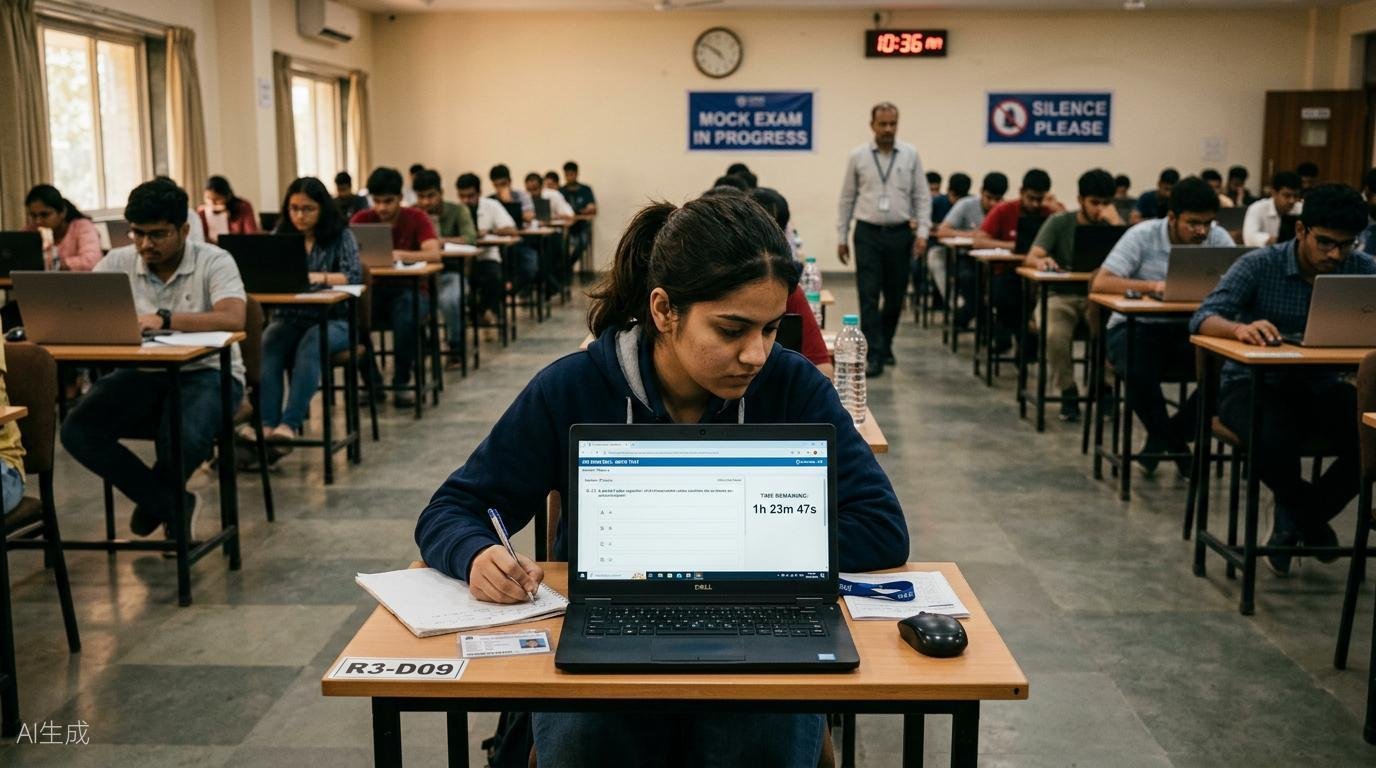
Here's a sobering statistic: according to ACCA Global's exam performance data, students who complete fewer than 3 mock exams per paper have pass rates that are 20-30 percentage points lower than students who complete 6 or more. Mock exams aren't just "nice to have" — they're the single most important differentiator between students who pass and students who keep resitting.
Yet despite this clear evidence, many ACCA students treat mock exams as an afterthought. They spend months reading study texts and watching lectures, attempt one or two practice papers in the final week, walk into the exam underprepared for the mental and physical demands of a 3-hour exam and then wonder why they fell short. This guide will show you how to avoid that trap by leveraging the best ACCA practice platforms and mock exam strategies available in 2026.
Why Mock Exams Are Essential for ACCA Success
ACCA exams test more than your knowledge of accounting concepts. They test your ability to apply that knowledge under time pressure, navigate the CBE interface efficiently, manage your mental stamina across a 3-hour session and produce structured, mark-maximising answers. None of these skills can be developed by reading textbooks or watching lectures alone.
Mock Exams Build Mental Stamina
A 3-hour ACCA exam is mentally exhausting. If you've never sat through a full 3-hour timed test before exam day, you're asking your brain to perform an endurance feat it hasn't trained for. Students who regularly attempt full mock exams develop the mental stamina to maintain focus and quality of thinking throughout the entire exam period. Those who haven't often find their performance dropping off sharply in the final hour — exactly when they need to be at their best.
Mock Exams Familiarise You With the CBE Interface
The ACCA Computer-Based Exam (CBE) interface has specific features, navigation patterns and quirks that take time to get comfortable with. How do you flag questions for review? How does the spreadsheet tool work? Where is the on-screen calculator? Students who encounter these questions for the first time on exam day waste precious minutes figuring out the system. Those who've practiced extensively on CBE-simulated mocks navigate the interface instinctively.
Mock Exams Identify Knowledge Gaps Early
There's a difference between understanding a concept when reading about it comfortably and applying it under exam conditions. Mock exams reveal the gap between "I understand this" and "I can produce a correct answer in 1.8 minutes per mark under pressure." The earlier you identify these gaps, the more time you have to address them before the real exam.
Mock Exams Reduce Exam Anxiety
Anxiety thrives on uncertainty. Students who've sat 6+ full mock exams know exactly what to expect on exam day. The format isn't mysterious, the timing isn't a surprise and the pressure feels familiar rather than overwhelming. This confidence translates directly into better performance.
Best ACCA Practice Platforms in 2026
The ACCA practice platform landscape has several strong options, each with distinct strengths. Here's what you need to know about each:
1. ACCA Study Hub (Free)
ACCA Study Hub is ACCA Global's official learning platform, launched as part of their digital learning strategy. It's free for all registered ACCA students and provides access to approved study content, practice questions, progress tracking and revision materials aligned with the current syllabus. While it doesn't offer full CBE simulation, the practice questions are drawn from official ACCA sources and closely mirror the style and difficulty of real exam questions. Every ACCA student should use Study Hub as part of their preparation.
2. BPP Practice Kit (Paid)
BPP is one of ACCA's official content partners and their Practice & Revision Kits are the gold standard for ACCA question practice. Each kit contains hundreds of exam-style questions, detailed solutions with examiner-style marking and technical articles on challenging topics. BPP's question banks are comprehensive and regularly updated to reflect syllabus changes. They're available in both physical and digital formats, with the digital version offering some CBE-style practice.
3. Kaplan Exam Kit (Paid)
Kaplan is another ACCA-approved content provider with excellent practice materials. Their Exam Kit series is particularly strong for Strategic Professional papers, where the question style requires nuanced answer structures. Kaplan's solutions are detailed and include examiner commentary that helps students understand not just the correct answer but why other approaches lose marks. Their online platform, Kaplan OnDemand, integrates practice questions with video explanations.
4. Becker Professional Education (Paid)
Becker has invested heavily in CBE simulation technology, making their platform one of the best for replicating the actual exam experience. Their Adapt2U technology personalises question selection based on your performance, focusing practice on your weak areas. Becker's mock exams are particularly well-regarded for their similarity to the real ACCA CBE interface and their detailed performance analytics.
5. OpenTuition (Free + Paid)
OpenTuition is a popular free resource among ACCA students, offering lecture videos, notes and a question practice forum. Their free resources are genuinely useful, especially for students on tight budgets. They also offer a paid mock exam service with marking that provides detailed feedback. While not as comprehensive as BPP or Kaplan, OpenTuition is an excellent supplementary resource.
Platform Comparison: Features, Cost & Quality
| Platform | Cost (India) | Question Quality | CBE Simulation | Syllabus Coverage | Analytics | Best For |
|---|---|---|---|---|---|---|
| ACCA Study Hub | Free | Official ACCA questions | Basic | Full syllabus | Progress tracking | All students (foundation layer) |
| BPP Practice Kit | INR 2,500 - 4,000 per paper | Excellent, exam-standard | Moderate (digital kit) | Comprehensive | Limited | Students wanting maximum practice |
| Kaplan Exam Kit | INR 2,500 - 4,000 per paper | Excellent, strong at Strategic Pro | Moderate | Comprehensive | Moderate | Strategic Professional students |
| Becker | INR 8,000 - 15,000 per paper | Very good, adaptive | Excellent (best simulation) | Comprehensive | Detailed (Adapt2U) | Students prioritising CBE practice |
| OpenTuition | Free (paid mocks available) | Good for free resource | Limited | Core topics well covered | Basic | Budget-conscious students |
| Prepper Gurukul Mocks | Included in coaching | Custom, exam-calibrated | Full CBE simulation | Aligned to ACCA syllabus | Detailed + faculty feedback | Coaching students wanting structured mocks |
How to Use Mock Exams Effectively
Attempting mock exams is only half the battle — how you use them determines whether they actually improve your performance. Here's a proven framework:
Step 1: Simulate Exact Exam Conditions
Find a quiet space. Set a timer for the exact exam duration (typically 3 hours). Put your phone in another room. Don't check answers, notes, or the internet during the mock. Use the bathroom beforehand. The closer your mock conditions are to the real exam, the more valuable the practice.
Step 2: Attempt the Full Mock Without Peeking
The biggest mistake students make with mock exams? They check answers after every question. In the real exam, you can't do that. We train students to attempt full 3-hour mocks without peeking at answers. It builds the mental stamina that separates pass from fail. Even if you're unsure about a question, make your best attempt and move on — just like you will in the real exam.
Step 3: Review Every Wrong Answer in Detail
After completing the mock, take a 30-minute break. Then review every question you got wrong or struggled with. For each, ask: Did I not know the concept? Did I know it but apply it incorrectly? Did I run out of time? Was my answer structure wrong? This diagnostic process is where the real learning happens.
Step 4: Track Weak Topics for Targeted Revision
Keep a running list of topics where you consistently lose marks. Before your next mock, revise these topics specifically. Your mock performance should show improvement in previously weak areas — if it doesn't, your revision approach needs adjustment.
Step 5: Analyse Time Management
Did you finish all questions? Did you rush through the final section? Did you spend too long on early questions? Time management is a skill that can only be developed through timed practice. Most failing students know the content but run out of time.
Step 6: Space Mocks Throughout Your Preparation
Don't cram all your mocks into the final week. Start with untimed practice questions 6-8 weeks before the exam. Progress to timed section tests 4 weeks out. Attempt your first full mock 3 weeks before the exam, then one per week until exam day. This spaced approach gives you time to address gaps identified in each mock.
How Many Mock Exams Should You Attempt?
The number of mocks you need depends on your paper level and your confidence:
| ACCA Level | Minimum Mocks | Recommended Mocks | Notes |
|---|---|---|---|
| Applied Knowledge (BT, MA, FA) | 3-4 per paper | 5-6 per paper | 2-hour exams, shorter but still need stamina |
| Applied Skills (LW, PM, TX, FR, AA, FM) | 4-5 per paper | 6-7 per paper | 3-hour exams, CBE simulation essential |
| Strategic Professional (SBL, SBR, Options) | 5-6 per paper | 7-8 per paper | Complex case studies need repeated practice |
Quality matters more than quantity. Six mocks with thorough review and targeted revision between each will produce better results than ten mocks crammed in the final two weeks with superficial review. Space your mocks to allow 3-5 days between each for revision of identified weak areas.
Free vs Paid ACCA Practice Resources
Can you pass ACCA using only free resources? For Applied Knowledge papers — Business and Technology (BT), Management Accounting (MA) and Financial Accounting (FA) — the answer is yes for disciplined students. ACCA Study Hub provides solid foundational practice and OpenTuition offers useful supplementary materials. The exam fees at this level are lower, so the financial risk of a resit is smaller.
However, for Applied Skills and especially Strategic Professional papers, most students benefit significantly from investing in paid practice resources. The complexity of questions at these levels, the need for detailed model answers and the value of CBE simulation all justify the cost. Consider this: a BPP Practice Kit costs approximately INR 3,000-4,000 per paper. An ACCA exam resit costs GBP 130-260 (approximately INR 14,000-28,000) plus the value of your time. The practice kit pays for itself if it helps you avoid even one resit.
Our recommended approach: use ACCA Study Hub as your foundation (it's free and official), add a BPP or Kaplan Practice Kit for your weaker papers and use your coaching institute's mock exams for full exam simulation. This three-layer approach gives you comprehensive coverage without unnecessary expense.
From Nagpur and Central India: At Prepper Gurukul, our mock exam program simulates real ACCA exam conditions — same timing, same CBE interface, same pressure. Students who complete 6+ mock exams per paper have significantly higher pass rates than those who rely solely on textbook study. Our students from Nagpur, Amravati, Wardha and across Central India access the same mock testing infrastructure as our online students from Mumbai and Bangalore — everyone gets the full CBE simulation experience.
Faculty Perspective: The Mock Exam Mindset
The biggest mistake students make with mock exams? They check answers after every question. In the real exam, you can't do that. We train students to attempt full 3-hour mocks without peeking at answers. It builds the mental stamina that separates pass from fail.
One of our students — a working professional from a mid-sized firm in Central India — had failed Strategic Business Reporting (SBR) twice before joining us. She knew the standards. She could explain IFRS 15 revenue recognition beautifully in class discussions. But she kept scoring 48-49 in the actual exam. The problem wasn't knowledge — it was exam technique. She was spending 45 minutes on 20-mark questions and then rushing through the final 30-mark section.
We put her through our structured mock program: 8 full SBR mocks over 6 weeks, each followed by a detailed review session where we analysed her time allocation question by question. By mock 4, she had diagnosed her own problem. By mock 6, she had fixed it. She scored 62 in her next SBR attempt. The content she knew hadn't changed — her ability to deliver it under exam conditions had.
Understanding CBE Simulation
CBE (Computer-Based Exam) simulation is technology that replicates the actual ACCA exam software you'll use on exam day. Understanding what good CBE simulation includes will help you evaluate practice platforms:
Essential CBE Simulation Features
- Question navigation: Ability to flag, skip and return to questions
- Spreadsheet tool: Functional spreadsheet for calculations (crucial for FM, AFM, SBR)
- Word processor: For typed answers in SBL and strategic papers
- On-screen calculator: Same functionality as the real exam
- Time display: Countdown timer visible throughout
- Answer format variety: Multiple choice, multiple response, number entry and constructed response
Why CBE Simulation Matters More at Higher Levels
At Applied Knowledge level, the exam interface is relatively simple — mostly multiple choice and number entry. At Applied Skills and Strategic Professional, you're working with complex spreadsheets, writing structured answers and navigating between multiple exhibits and case study materials. The time you save by knowing the interface instinctively can be the difference between finishing and leaving questions unanswered.
Final Recommendations
Here's our recommended ACCA practice strategy for 2026:
- Start early: Begin practice questions 6-8 weeks before your exam, not 1-2 weeks
- Layer your resources: Free Study Hub for daily practice + paid kit for comprehensive coverage + coaching mocks for exam simulation
- Review deeply, not widely: Thorough review of 5 mocks beats superficial review of 10
- Track everything: Keep a log of weak topics, time allocation issues and recurring mistakes
- Simulate the real thing: Your final 2-3 mocks should replicate exam day conditions exactly
Mock exams are not a luxury in your ACCA preparation — they're a necessity. The students who treat them seriously are the students who pass.